High-level Brussels event convened by Saxony-Anhalt, Navarra and the European Solar Manufacturing Council rallies regions, parliamentarians, clean-tech manufacturers and trade unions behind a credible “Made in Europe” framework
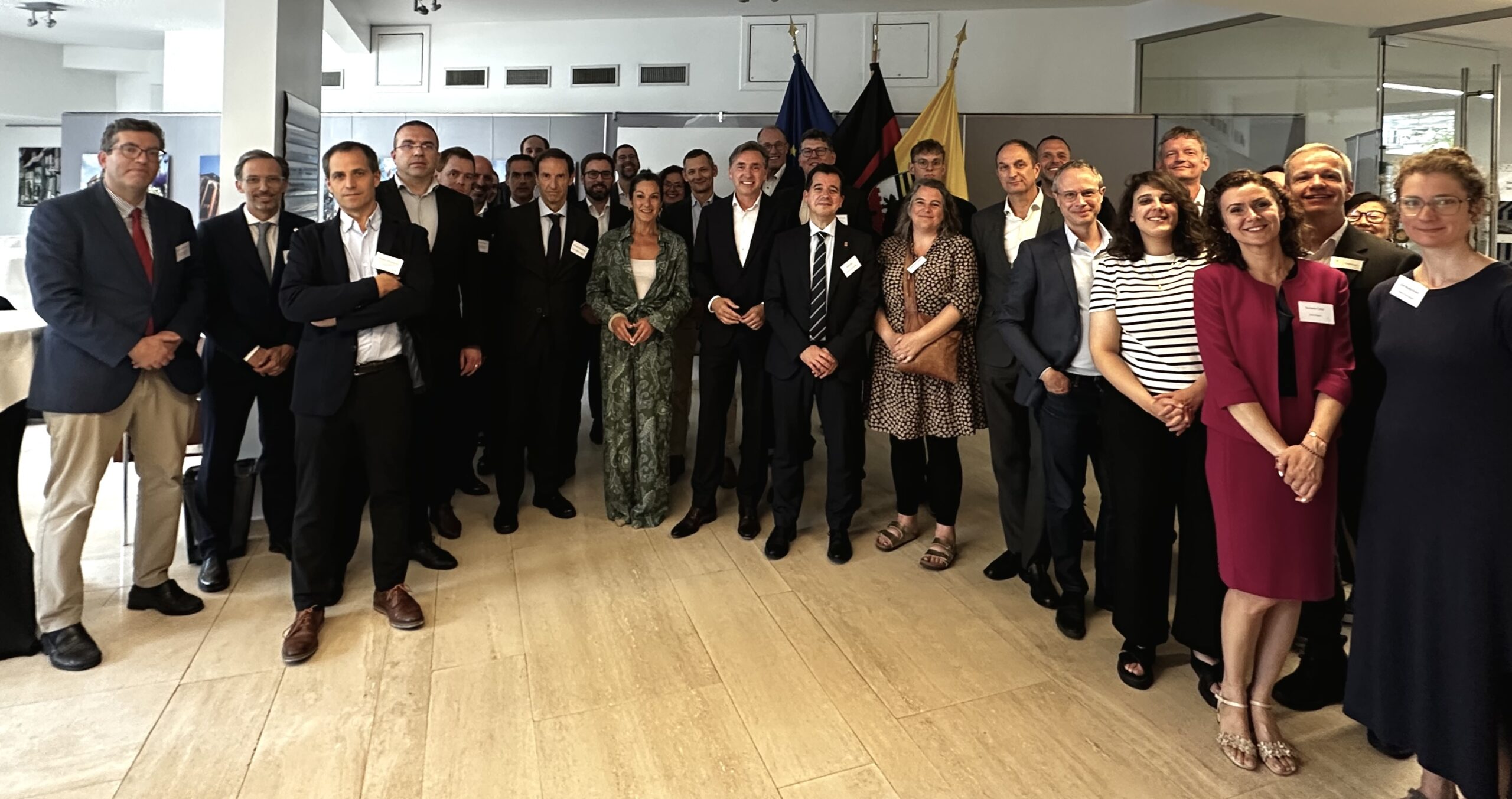
Brussels, 30 June 2026 – A broad coalition of European regions, clean-tech manufacturers and trade unions came together in Brussels on 30 June to launch a joint push for a stronger “Made in Europe” framework in the European Union’s planned Industrial Accelerator Act (IAA). The event – “The Industrial Accelerator Act (IAA): the last opportunity to future-proof Europe’s clean-tech industry” – was convened by German federal state of Saxony-Anhalt, the Spanish region of Navarra, Enercluster and the European Solar Manufacturing Council (ESMC). The meeting was hosted by Saxony-Anhalt’s Representation to the EU.
Many participants agreed to work towards an alliance that will jointly advocate for manufacturing genuinely located in Europe to sit at the heart of EU industrial policy. The alliance is calling for ambitious European content provisions in the IAA, following successful examples from many countries arround the globe.
The alliance is now inviting further regions, industrial clusters, companies and social partners across the Union to join that alliance and to help shape and endorse the joint position paper that emerged from the discussions.
A room that reflected a broad European consensus
The defining feature of the meeting was its breadth. Regions from five member states – Germany, Spain, France, Austria and Italy – were represented, among them Saxony-Anhalt, Navarra, Grand Est, Nouvelle-Aquitaine, Normandie, Upper Austria, and Emilia-Romagna. They were joined by members of the European Parliament from across the political spectrum, members of the European Economic and Social Committee), trade unions, regional industrial clusters and manufacturers from along the entire value chain.
The opening session was led by Thomas Wünsch, State Secretary of Saxony-Anhalt’s energy ministry, and by Mikel Irujo, Navarra’s Minister for Economic Development. Political reactions came from Members of the European Parliament Tomislav Sokol (EPP, Croatia) and Oihane Agirregoitia (Renew Europe, Spain), the latter a member of Parliament’s Committee on Industry, Research and Energy, as well as from Konstantinos Diamantouros of the European Economic and Social Committee (Employers’ Group). The trade unions IndustriAll and IG Metall added the perspective of Europe’s industrial workforce.
The industry was present in force across the clean-tech spectrum. The stakeholder roundtable heard from Holosolis and InnoEnergy on solar and storage, TESVOLT on storage, Sakana and Laulagun Bearings on wind, and SwiftSolar on solar cells and production equipment..
In his remarks, Thomas Wünsch highlighted the challenges facing the European clean-tech industry and emphasized the importance of a consistent focus on European value creation. He said: “The IAA’s ‘Made in Europe’ concept must also require actual technology production in Europe. Previous experiences with the bankruptcy of Meyer Burger and other solar companies have shown just how intense the competition is – especially with Asian suppliers. It is necessary to learn from the past and create an EU framework that enables existing and future companies in the wind, solar, and energy storage sectors to operate successfully. By focusing on practical solutions, we can further develop the IAA from a promising concept into an effective tool for the future of European industry.”
Minister Mikel Irujo underlined that Navarra has pursued a clear industrial-policy line in favour of European value creation for many years, actively supported by a large number of companies based in the region. He expressed his concern that the industry and jobs created are at stake now due to unfair competition from dominant sources of supply.
“The many stakeholders in the room – regions, parliamentarians, unions and manufacturers from across the Union – show that the appetite for real European manufacturing is there. I am very delighted that we are now opening the alliance to every region, cluster and company that wants ‘Made in Europe’ to mean what it says,“ Christoph Podewils, Secretary General, European Solar Manufacturing Council (ESMC) said.
What the alliance is asking for
The joint discussion paper sets out a shared diagnosis and a package of targeted changes to the IAA. At its core: “Union origin” should reward manufacturing genuinely located in Europe rather than being diluted to cover any trade partner; “Made in Europe” should apply as a mandatory pre-qualification criterion rather than a weak, easily discounted award criterion; volume thresholds should apply per technology so that requirements cannot be concentrated on one technology while others are exempt; and the criteria should cover the strategically critical core components, not a single part that can be sourced in Europe while the rest of the product is imported. The paper covers solar, wind and battery storage, treats cybersecurity as a strategic priority, and is deliberately open-ended so that further technologies – grid components and others – and further contributors can be added.
An open invitation
The co-conveners will follow up with the participants on the further development, endorsement and dissemination of the joint position paper. Regions, industrial clusters, companies and trade unions that share the goal of a credible “Made in Europe” framework are warmly invited to join the alliance and to add their name to the common position. Interested organisations can contact ESMC directly.