Joint letter and position paper set out three demands: for the Industrial Accelerator Act a strict Made in Europe definition covering the whole solar value chain, effective market protection, and investment and operating support. A European solar PV manufacturing value chain at 30 GW per year would create around 80,000 jobs and add 4 billion euros to EU GDP.
Brussels, 12 October 2026 – More than 35 companies and institutions from across the European solar industry have signed a joint letter urging the European Parliament, the Council and the Member States to use the Industrial Accelerator Act (IAA) to rebuild the complete photovoltaic value chain in Europe. The letter is accompanied by a 13-page position paper that lays out the case with data: where European capacity exists today, where it is missing, what a full value chain costs, and what it returns in jobs, tax revenue and resilience. Both documents were sent to the members of the European Parliament’s ITRE, IMCO and INTA committees.
Europe is missing the middle of the chain
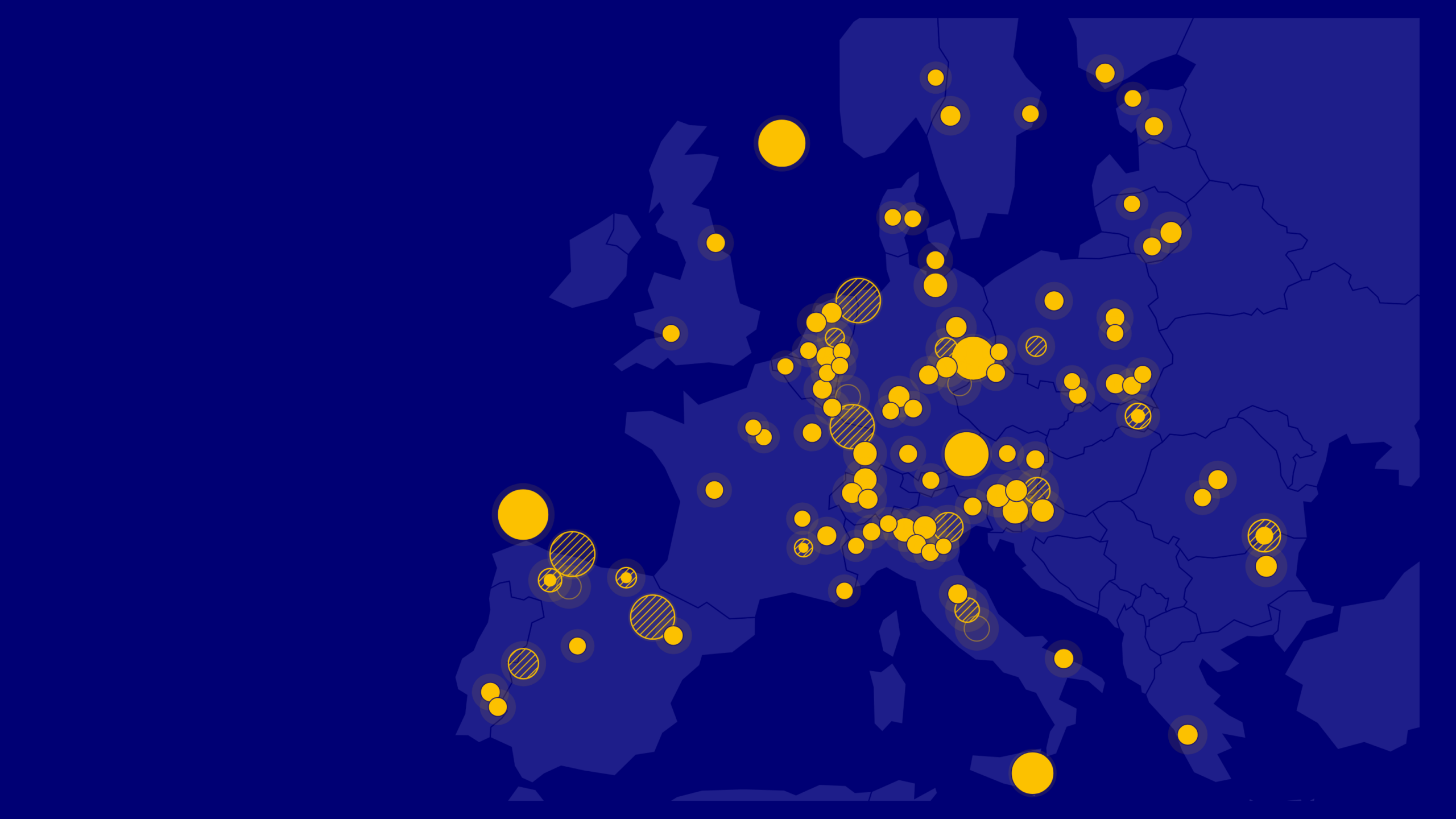
The position paper maps more than 100 European manufacturing sites. The picture is clear: Europe has more than 75 module assemblers, but only a handful of companies producing solar cells or building cell capacity at gigawatt scale, a single ingot-and-wafer project and one polysilicon producer plus an additional polysilicon project. “Module assembly alone does not create resilience,” the letter states. “If Europe wants technological sovereignty, it needs the entire value chain.”
“The projects, the technology and the investors are there. What is missing is a market that values European production. The IAA can create that market – but only if Made in Europe means made in Europe, and only if it covers the full chain within a clear timeline,” said Christoph Podewils, Secretary General of European Solar Manufacturing Council, which sent the letter on behalf of the signing companies.
The machines are still made in Europe
A chapter of the paper is devoted to production equipment. At least 38 specialised European machine builders still cover almost every process step – for several steps, European suppliers are the only alternative to Chinese offers worldwide. Many of them also serve the semiconductor industry. The paper argues that European technology competence is the precondition for rebuilding PV production at all. The signatories therefore call for a defined share of manufacturing support to be linked to European equipment.
Three demands
1. A strong and swift IAA with a strict definition of Made in Europe, early application, coverage of the full solar value chain within five years of entry into force, and the inclusion of European-made production equipment. The signatories welcome the joint report of the ITRE, IMCO and INTA rapporteurs.
2. Adequate market protection against systemic overcapacity, foreign subsidies and dumping, in line with the EU’s new overcapacity and diversification instrument.
3. Investment and operating support to scale the full value chain and attract private capital – including, where justified, targeted and time-limited support for operating costs, since solar manufacturing is an OPEX-driven industry.
Small cost, large benefit
According to figures from Fraunhofer Institute for Solar Energy Systems analysed in the paper, a European value chain producing 30 GW of modules per year would support around 80,000 direct and indirect jobs, add roughly 4 billion euros per year to EU GDP and return about 2 billion euros annually in taxes and social contributions. The additional cost of European-made components is estimated at about 0.25 cent per kilowatt-hour on the average EU wholesale power price and within the resilience margin the Net-Zero Industry Act already allows in auctions. The largest single item in that premium is not European manufacturing but the end of below-cost pricing from China, which will disappear whether or not Europe acts. “Measured against the hundreds of billions of euros of damage caused by recent supply shocks, this is an insurance premium, not a subsidy,” the letter says.
“Investors are not waiting for subsidies, they are waiting for a market. European projects, sites and technology are ready. Give European-made polysilicon, wafers and cells a guaranteed place in European demand, and the capital will flow, otherwise it will go elsewhere,” said Carsten Rohr, Co-Chair of ESMC and representing RESiLICON, one of the initiators of the letter.
Next steps
With the European Parliament’s committees now working on their position and the European Council forming its general approach over the coming weeks, ESMC and the signatories are calling on Member States to back the European Parliament rapporteurs’ ambitious approach – in particular a limited, opt-in definition of Union origin rather than an automatic extension to free-trade-agreement partners.
Rebuilding the European solar value chain from quartz to cells
The letter has been signed by the following companies and organisations
Austria
AIT – research & innovation
DOMICO – PV façades
Ecoplus Green Building Cluster – business agency
Lenzing Plastics – films & laminates
TPPV – technology platform
Welser Profile – racking
Belgium
Becquerel Institute – market intelligence
Belga Solar – modules
France
CEA – research
Ferroglobe – quartz & metallurgical-grade silicon
Holosolis – cells & modules
Voltec Solar – modules
Germany
CS Wismar Sonnenstromfabrik – modules
FENECON – storage & EMS
Lapmaster Wolters – production equipment
M10 Solar Equipment – production equipment
Oxford PV – perovskite-silicon tandem cells and modules
PVA TePla – production equipment
RCT Solutions – engineering consulting
RENA – production equipment
SINGULUS TECHNOLOGIES – production equipment
Swift Solar – cells, modules, production equipment
Wacker – polysilicon
Italy
Ecoprogetti – production equipment
FuturaSun – modules
Sunerg Solar – modules
Netherlands
RESiLICON – polysilicon
Solarge – modules
Spain
CENER – research
Ferroglobe – quartz & metallurgical-grade silicon
Ingeteam – power electronics
MCPV – cells & modules
Mondragon Assembly – production equipment
Sunwafe – ingots & wafers
Sweden
Ferroamp – inverters & EMS
Midsummer – cells & modules, production equipment
Switzerland
3S Swiss Solar Solutions – BIPV systems
United Kingdom
GR2L – argon recycling systems
Oxford PV – perovskite-silicon tandem cells and modules